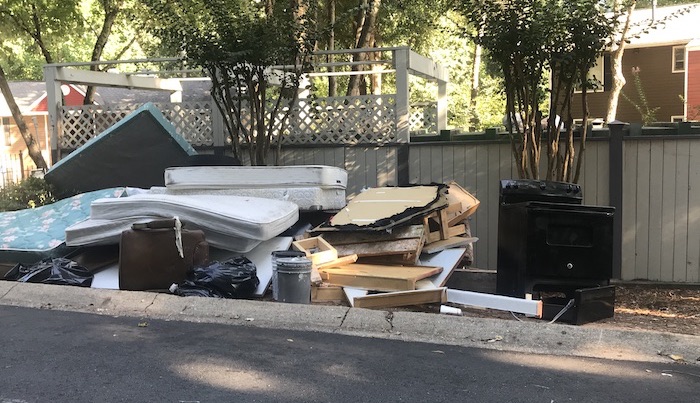
Before disposing of old furniture in a dumpster, there are two things worth understanding. First, most dumpsters you encounter belong to someone else, and using them without permission is considered illegal dumping. Second, even in a dumpster you’re authorized to use, certain items might be prohibited.
The good news is there are plenty of legal, eco-friendly, and often free ways to dispose of old furniture. Here’s a clear breakdown of your options.
Can I throw furniture in a dumpster?
Click to jump to any section
When throwing furniture in a dumpster is illegal
Dumpsters at apartment complexes, office buildings, shopping centers, and restaurants are privately owned. Even when they’re visible from a public sidewalk, using them without the owner’s permission is considered illegal dumping in virtually every state, regardless of what you’re disposing of or how little space it takes up.
Can you leave furniture next to a dumpster?
No. Placing furniture beside a dumpster on private property still constitutes trespassing and illegal dumping. The waste hauler has no obligation to remove items left outside the container, and you remain liable for anything that isn’t properly disposed of. If you need furniture removed quickly, the safest options are scheduling a bulk curbside pickup through your city or booking a junk removal service.
Fines vary by state and city, but they’re not small. In many states they start at $500. In Texas, dumping over five pounds can run up to $2,000. In California, illegal dumping is punishable by fines up to $10,000 under Penal Code 374.3. Repeat offenses can escalate to misdemeanor or felony charges.
Items you cannot throw in a dumpster
Even when you’re allowed to use a dumpster, not everything can go in it. Some items are banned for safety reasons, some because of environmental regulations, and some because most landfills simply won’t accept them. These rules apply whether you rented the dumpster or own it outright.
Prohibited items in most dumpsters
- car batteries
- household cleaners and solvents
- pesticides and herbicides
- asbestos-containing materials
- medical or biohazardous waste
For hazardous materials, contact your county’s household hazardous waste (HHW) facility. The EPA’s hazardous waste guide and Earth911.com can help you find nearby drop-off locations. Many counties also run free HHW disposal events.
If you’re ever unsure whether an item is allowed, contact your local Public Works Department or Office of Solid Waste before loading the container.
Can you put a mattress in a dumpster?
In most cases, no. Mattresses are prohibited in the majority of dumpsters, including roll-off rentals. They’re bulky, costly for landfills to process, and subject to specific disposal regulations in many states. Most roll-off providers explicitly list them as a banned item.
There are several better options for mattress disposal:
- Mattress recycling: Many states have mattress recycling programs. Use Earth911.com to find a certified recycler near you. Most mattress components including steel springs, foam, and fabric can be recovered.
- Municipal bulk pickup: Many cities offer scheduled bulk item pickups. Contact your local waste authority to request a slot. Wait times vary from a few days to several weeks.
- Retailer haul-away: If you’re buying a new mattress, many retailers will haul away the old one at delivery for a small fee or free with purchase.
- Junk removal service: A professional hauler can remove your mattress same- or next-day and route it to recycling or donation where possible.
Can you donate a used mattress?
It depends on the condition of your mattress and who you ask. Some organizations do take gently used mattresses, including certain Habitat for Humanity ReStore locations, local homeless shelters, transitional housing programs, and furniture banks in the Furniture Bank Network.
That said, most major Goodwill locations and many Salvation Army branches do not accept mattresses. The reasons are practical: bed bug liability is significant, professional sanitization is expensive, and many locations simply don’t have the storage or resources to manage rejected items. Policies also vary by location and can change seasonally, so it’s always worth calling ahead before making the trip.
For a mattress to be accepted anywhere, it generally must be:
- Clean and free of visible stains
- Free of odors (smoke, mildew, or strong perfume)
- Free of bed bugs, mold, or any pest evidence
- Structurally sound with no broken springs or excessive sagging
If your mattress doesn’t meet these standards, recycling is a more realistic option than donation.
What you can throw in a dumpster
If you have rented a roll-off dumpster or have permission to use one, the items below are generally accepted. Rules vary by company and municipality, so it’s a good idea to confirm with your provider before loading.
- wood furniture (tables, chairs, bookshelves)
- metal furniture
- bricks and concrete
- drywall
- dirt and rocks
- paper and cardboard
- roofing materials
- flooring and tile
- yard waste
- storm debris
- asphalt and wallpaper
- general construction debris
One important distinction: solid wood furniture like tables, chairs, and bookshelves is almost always accepted. Upholstered pieces, sofas, recliners, and stuffed chairs, are less consistent. Some providers accept them, others don’t, depending on local landfill rules. If you’re unsure, confirm with your rental company before loading.
Better alternatives to throwing furniture in a dumpster
Even when dumpster disposal is an option, it’s often not the most practical or affordable path. Before renting a container or scheduling a disposal trip, it’s worth considering these alternatives, many of which cost nothing and require less effort than you might expect.
Sell it online
If your furniture is still in decent shape, you can often make money instead of paying to dispose of it. Facebook Marketplace and OfferUp are the best platforms for large furniture items since buyers are local and can arrange their own pickup. For smaller or niche pieces, eBay and Craigslist are also worth trying.
Give it away for free
If selling feels like too much effort, apps like Freecycle and Nextdoor make it easy to connect with neighbors who want your unwanted items. Facebook “Buy Nothing” groups are another reliable option for moving furniture quickly at no cost to you or the recipient.
Recycle it
Most furniture contains recyclable materials. Metal frames, springs, solid wood, and foam can all be diverted from landfills. Use Earth911.com to find recycling drop-offs near you that accept specific furniture types. Some cities also offer curbside bulk recycling pickup on scheduled days.
Donating old furniture
For furniture that’s still in good condition, donation is one of the most worthwhile disposal options. It diverts usable items from landfills, supports people in need, and typically costs nothing. Habitat for Humanity ReStore, the Salvation Army, and Goodwill are the most accessible options, and some locations offer free pickup for large items.
To improve your chances of acceptance, furniture should be clean, free of significant damage, and in working condition. Call ahead to confirm the organization’s current policies, as intake rules vary by location and can change seasonally.
For items like old sofas, dining sets, or bedroom furniture in good condition, local shelters, transitional housing programs, and college student groups are also worth contacting. Many will pick up for free.
When to hire a junk removal company

When you’re dealing with multiple heavy items, a full room of furniture, or pieces that require special disposal, a junk removal company is often the most practical solution. Rather than renting a truck, coordinating drop-offs, and handling the heavy lifting yourself, you can schedule a pickup and have professionals manage everything from start to finish.
Reputable junk removal companies don’t simply send everything to the landfill. Many sort what they collect and route usable items to local donation centers and recyclable materials to appropriate processing facilities, making it a more responsible disposal option than it might initially seem.
LoadUp offers upfront, transparent pricing before you book, next-day pickup availability in most areas, and eco-friendly disposal through donation and recycling. All contracted haulers carry a $1M insurance policy and pass background checks before completing pickups.
Making the right call on furniture disposal
Getting rid of old furniture doesn’t have to be a headache. The right approach depends on what you have, what condition it’s in, and how quickly you need it gone.
If your furniture is still in good shape, start with donation or resale. It costs nothing, keeps usable items out of landfills, and someone else gets real value from what you no longer need. If it’s seen better days, recycling is a far better option than defaulting to a landfill. And if you’re dealing with a large amount, heavy pieces, or items that require special handling, a junk removal service is usually the most practical and cost-effective solution.
The one thing to avoid is using a dumpster you don’t own. The fines aren’t worth it, and between donation, recycling, bulk pickup, and professional removal, there’s no shortage of better options available to you.
Still have questions about disposing of specific items? Browse our disposal guides for item-by-item guidance, or get an instant quote from LoadUp and let us handle the heavy lifting.
Need furniture gone fast? See an instant online price from LoadUp ❯
Frequently asked questions
It depends on whose dumpster it is. If you rented a roll-off dumpster, most solid wood furniture like tables, chairs, dressers, and bookshelves is generally allowed. Using someone else’s dumpster without permission at an apartment complex, office building, or shopping center is illegal dumping and can result in fines of $500 or more.
It is illegal to use a dumpster you don’t own or have permission to use. Fines vary by state but commonly start at $500 and can reach $2,000 or more for larger amounts. In California, illegal dumping can carry fines up to $10,000. Repeat or large-scale offenses can result in misdemeanor or felony charges.
Mattresses are prohibited in most dumpsters, including roll-off rentals. Your best options are scheduling a bulk item pickup through your city, dropping it at a mattress recycling facility, booking a junk removal service, or donating it if it is clean and in good condition. Call ahead to confirm acceptance before attempting to donate.
Some organizations accept gently used mattresses, including certain Habitat for Humanity ReStore locations, local shelters, and furniture banks. Most Goodwill locations and many Salvation Army branches do not accept them due to hygiene regulations. Policies vary by location, so always call ahead. The mattress must be clean, stain-free, odor-free, and free of pests to be accepted.
In a rented roll-off dumpster, most solid wood and metal furniture is generally allowed, including tables, chairs, dressers, and bookshelves. Upholstered furniture like sofas and recliners may be restricted by some providers depending on local landfill rules. Mattresses, large appliances, and anything containing hazardous materials are prohibited in virtually all dumpsters.
The easiest option is booking a junk removal service. They handle all the heavy lifting, come to your home, and dispose of items through donation and recycling where possible. Other good options are donating to Habitat for Humanity or the Salvation Army, listing on Facebook Marketplace or Freecycle, or scheduling a bulk pickup through your city.
By LoadUp Editorial Team | Published December 2018 | Updated May 2026