

Whether you are managing an estate after a loss, preparing a property for sale, or clearing a rental unit after a difficult tenancy, the challenge is often the same: a property full of items that need to go, and no clear path for handling it efficiently.
Property cleanout services exist to solve exactly that problem. A professional cleanout removes all unwanted contents from a property in a single coordinated job, handling everything from heavy furniture and appliances to boxes, clothing, and accumulated debris. The result is a fully cleared space, with items responsibly sorted for donation, recycling, or proper disposal.
This guide covers what property cleanout services include, who needs them, what the process looks like from start to finish, how pricing is determined, and what to look for when choosing a provider.
- What Are Property Cleanout Services?
- Who Needs a Property Cleanout?
- Types of Properties Served
- What Items Can Be Removed?
- How the Cleanout Process Works
- Eco-Friendly Disposal and Donation Diversion
- Property Cleanout Pricing: What to Expect
- Why Choose LoadUp?
- Get a Free Quote
- Frequently Asked Questions
What Are Property Cleanout Services?
A property cleanout service is a professional removal operation that clears an entire property of its unwanted contents, including furniture, appliances, clothing, boxes, debris, and general household or commercial accumulation, in a single visit. Unlike standard junk removal, which is scoped to specific items a customer identifies in advance, a property cleanout is defined by space rather than inventory. The crew clears whatever needs to go across every room or area specified, without requiring the customer to sort, stage, or pre-move items beforehand.
Beyond removal, a quality property cleanout service includes responsible post-job handling. Items in usable condition are sorted for donation to local charitable partners. Materials eligible for recycling are routed to appropriate facilities. What remains is disposed of at licensed disposal sites. This approach ensures that the majority of what leaves the property is diverted from landfills.
The practical outcome is straightforward: the property is fully cleared and ready for its next purpose, whether that is a sale, a renovation, a new tenancy, or transfer of ownership.
Property cleanout vs. junk removal: understanding the difference
Junk removal is item-based. The customer identifies specific pieces (a broken recliner, a set of old appliances, a pile of construction debris) and the crew removes those items. It is the appropriate service when the scope is limited and well-defined.
A property cleanout is space-based. The scope is the property itself, or a defined section of it, such as a full basement, every room except the master bedroom, or the entire home including the garage. The crew clears all contents within that scope. No item-by-item inventory is required. The customer identifies what stays, if anything, and the crew handles the remainder.
For estate situations, full tenant move-outs, pre-sale clearings, and foreclosure properties, a property cleanout is the more practical and complete solution. Both services can also be combined in a single booking when the scope calls for it.
Who Needs a Property Cleanout?
Property cleanout services are used across a wide range of property transitions. The common thread is a need to clear an entire space efficiently, often under time pressure and without the resources to manage it independently.
Homeowners preparing to sell
Listing a property that contains years of accumulated furniture, clothing, and personal belongings creates significant preparation burden. A house cleanout service prior to listing ensures the property presents cleanly for staging and photography, removes items the seller is not transporting, and eliminates the need to coordinate multiple haul-away trips. For homes that have been occupied for many years, a professional cleanout is often the most time-efficient path to market readiness.
Landlords and property managers after tenant move-outs
According to the National Multifamily Housing Council, the average cost of vacancy and unit turnover for rental properties runs into hundreds of dollars per day when lost rent, cleaning, and re-leasing expenses are factored together. When a departing tenant leaves behind furniture, trash, or abandoned belongings, every additional day spent clearing the unit extends that cost. A professional cleanout service returns the unit to rent-ready condition in a fraction of the time it would take to manage independently.
Executors and families managing an estate cleanout
An estate cleanout following the passing of a family member involves clearing a lifetime of possessions while managing legal, financial, and family coordination responsibilities simultaneously. Engaging a professional cleanout service removes the physical burden from family members, ensures donation-eligible items are handled appropriately, and brings the property to a condition suitable for transfer or sale.
Real estate agents and investors
For agents, the condition of a property at listing directly affects its marketability. Professional cleanouts before staging or photography allow agents to present properties at their best. According to the National Association of REALTORS, 81% of buyers’ agents say staging makes it easier for buyers to visualize a property as their future home. For investors working with distressed, inherited, or foreclosed properties, cleanout turnaround speed is often the first variable in a renovation timeline.
Banks, lenders, and REO asset managers
Foreclosure and bank-owned properties require clearing, documentation, and restoration to marketable condition. These jobs frequently involve abandoned belongings and require a crew capable of working efficiently with minimal on-site oversight. Carrying costs accumulate for every day the asset remains uncleared, making fast and reliable turnarounds a priority.
Business owners and commercial tenants
Office relocations, retail closures, and warehouse clear-outs involve a category of items, including desks, filing systems, commercial shelving, and equipment, that require coordinated removal at scale. A commercial property cleanout manages the full scope of the job so business owners and facility managers can meet lease end dates and vacate on schedule.
Types of Properties Served
Professional cleanout services handle every major property type. While the scope of each job reflects the size and contents of the space, the core process remains consistent across all of them.
Single-family homes
Residential home cleanouts are the most common scenario. Whether a property has been occupied for five years or fifty, a full house cleanout service addresses every room, from the garage and basement to upper-floor bedrooms and attic storage. Volume that would require a family several weekends to sort and haul is typically cleared in a single day.
Apartments and condos
Multi-unit building cleanouts require coordination around building-specific factors including elevator access, move-out scheduling requirements, limited truck parking, and noise restrictions. Experienced cleanout crews manage these logistical considerations without placing additional burden on the property manager or tenant.
Estate properties
Estate cleanouts often involve a mix of items: some with significant sentimental or monetary value, others with none. Families frequently need time to walk through and identify items before the clearing begins. A professional cleanout crew works within that process, allowing for a review period before removal starts, and handles the remainder completely once the scope is confirmed.
Rental properties and multi-unit buildings
When rental units turn over, particularly following difficult tenancies, a fast professional cleanout minimizes vacancy duration. Property managers overseeing multiple units rely on cleanout services to maintain consistent turnover timelines across their portfolios.
Foreclosure and REO properties
Foreclosure cleanouts move quickly and often involve uncertainty about what has been left behind. Professional crews handle these jobs efficiently, clearing the property to the specifications required by lenders and asset managers without requiring extensive on-site coordination from the client.
Commercial spaces
Office spaces, retail units, warehouses, and storage facilities each generate distinct cleanout requirements. Commercial jobs typically involve heavier items, more complex logistics, and timelines tied to lease obligations. Reputable cleanout providers apply the same professional execution standards to commercial jobs as they do to residential work.
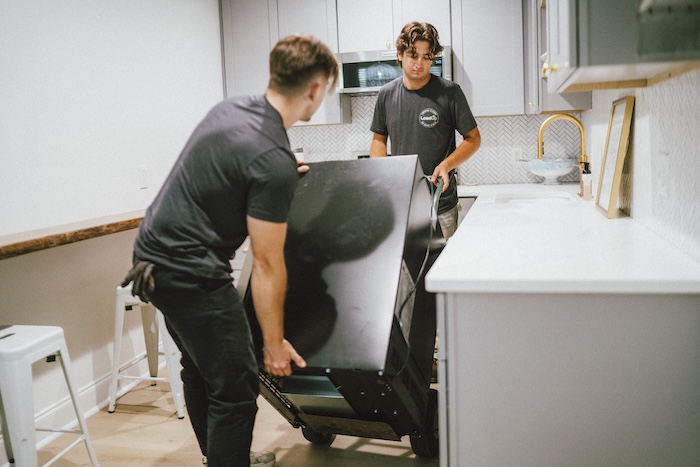
What Items Can Be Removed During a Property Cleanout?
A key advantage of a full property cleanout is that the customer is not required to categorize or pre-sort items before the crew arrives. All assessment and sorting happens on-site, with each item directed to the appropriate destination: donation, recycling, or licensed disposal.
Common items removed during a property cleanout:
- Furniture of all types, including sofas, sectionals, bed frames, dressers, dining sets, entertainment centers, and bookshelves
- Mattresses and box springs of all sizes
- Appliances, including refrigerators, washers, dryers, ovens, microwaves, dishwashers, and freezers
- Electronics, including televisions, computers, monitors, and printers, all routed to certified recycling facilities
- Clothing, linens, textiles, and personal belongings
- Boxes, storage bins, bags, and general household clutter
- Books, media, and miscellaneous household items
- Rugs, carpeting, curtains, and window treatments
- Exercise equipment, including treadmills, ellipticals, weight benches, and home gym systems
- Garage contents, including tools, storage shelving, sporting goods, and accumulated supplies
- Outdoor furniture, yard tools, and garden items
- Construction debris and renovation materials
- Office furniture and commercial equipment
Items that standard cleanout services cannot remove:
Certain categories fall outside the scope of standard cleanout services due to legal and safety requirements. Hazardous materials, including paint, household chemicals, gasoline, pesticides, propane tanks, and asbestos-containing materials, require specialized licensed handling that is separate from standard junk removal and cleanout operations. This restriction applies industry-wide.
In the majority of property cleanouts, hazardous materials represent a small and easily identifiable subset of overall contents. Customers can locate a household hazardous waste collection facility in their area through the EPA.
How the Property Cleanout Process Works: From Booking to Completion
The cleanout process is designed to minimize the preparation burden on the customer. Here is what a typical job looks like from start to finish.
Step 1: Receive an upfront quote
The process begins with a quote based on the property details and scope of the job. With a quality provider, pricing is presented and confirmed before any crew is dispatched. There are no on-site estimates and no adjustments after the fact. This matters in a service category where on-site pricing is still common practice, as it eliminates the pressure of being quoted only after a crew has already arrived.
Step 2: Select an appointment window
Once the quote is accepted, the customer selects a date and time. Reputable providers offer flexible scheduling, including same-day or next-day availability in most service areas, to accommodate time-sensitive situations such as listing deadlines, lease expirations, and estate settlement timelines.
Step 3: Crew arrives and conducts a walkthrough
On the day of the job, the crew arrives within the scheduled window and conducts a brief walkthrough with the customer or designated point of contact. This confirms the scope of the job, identifies any items remaining in the property, and addresses access considerations such as stairwells, elevator availability, or parking constraints. Preferences regarding donation versus disposal can also be communicated at this stage.
Step 4: Full removal without customer preparation
Customers are not required to move, stage, or pre-sort items before the crew begins. The crew removes items from wherever they are located within the property, carries them out, and loads the truck. This includes heavy appliances, oversized furniture, and fully stocked closets or storage areas.
Step 5: Sorting for donation, recycling, and disposal
Following removal, items are sorted based on condition and material type. Usable goods are directed to local donation partners. Recyclable materials are routed to appropriate facilities. Remaining items are taken to licensed disposal sites. A reputable cleanout provider will divert a significant portion of collected items from landfills through these channels.
Step 6: Property delivered clear
Upon completion, the property is fully cleared. All rooms, closets, and storage areas within the agreed scope are empty and ready for the next stage, whether that is a deep cleaning, inspection, renovation, or new occupancy.
Eco-Friendly Disposal and Donation Diversion
A common assumption about junk removal and cleanout services is that all collected items are sent to a landfill. Responsible providers operate differently. When a cleanout is handled properly, the majority of what leaves a property is diverted through donation and recycling rather than disposal.
Donation partnerships
Items in reusable condition are transported to local charitable partners following the cleanout. Organizations such as Habitat for Humanity ReStores, Goodwill, and the Salvation Army accept a broad range of household goods, including furniture, appliances, clothing, and housewares. When a cleanout provider has established donation partnerships, customers do not need to arrange drop-offs independently.
Electronics recycling
Electronics contain hazardous materials, including lead, mercury, and cadmium, that create environmental harm when disposed of in landfills. Responsible providers route televisions, computers, monitors, printers, and similar devices to certified e-waste recycling facilities. According to the EPA, electronics account for a disproportionate share of hazardous landfill content relative to their overall volume.
Metal and material recycling
Scrap metal recovered from appliances, fixtures, and hardware is routed to appropriate recycling facilities rather than disposal sites. This applies to components from washers, dryers, refrigerators, and other appliances that would otherwise contribute unnecessary volume to landfill disposal.
Responsible disposal of non-divertible items
Items that cannot be donated or recycled due to damage, contamination, or material type are disposed of at licensed facilities. A reputable cleanout provider maintains documented, legally compliant disposal for every item collected. When evaluating providers, ask directly about their diversion rate and disposal partnerships before booking.
Property Cleanout Pricing: What to Expect
Property cleanout pricing is not standardized across the industry, but the factors that drive cost are consistent. Understanding them helps customers evaluate quotes accurately and avoid surprises.
Factors that determine cleanout cost
Property size and room count. The number of rooms to be cleared is the primary cost driver. A studio apartment requires significantly less labor and truck capacity than a four-bedroom home with a finished basement, and pricing reflects that difference accordingly.
Volume and density of contents. Two properties of identical size can differ substantially in cleanout cost based on how much is in them. A lightly furnished rental unit clears faster than a fully packed estate with decades of accumulated belongings, even when the square footage is the same.
Item types. Standard household items are generally priced straightforwardly. Certain heavy or specialty items, such as pianos, safes, or oversized gym equipment, may affect pricing due to the additional handling they require.
Property access and logistics. Properties with single-floor layouts, elevator access, and direct truck access are more efficient to clear. Multi-story homes without elevator access, narrow stairwells, or limited parking increase the labor time required and are priced accordingly.
Full versus partial cleanout. When only specific rooms or sections need to be cleared, a partial cleanout can be scoped and priced to match. Customers should not pay for areas of the property that are not part of the job.
Location. Disposal costs, local labor rates, and regional market factors vary by geography. Pricing should reflect the specific service area, not a flat national rate.
Typical price ranges by property type
- Studio or 1-bedroom unit: $300 to $600, depending on volume
- 2 to 3 bedroom home: $600 to $1,200 for a full house cleanout service
- 4 or more bedrooms or estate property: $1,200 and above, with larger jobs typically requiring a custom quote
- Commercial or office spaces: Custom pricing based on scope and item types
These figures represent real-world estimates across typical jobs. Actual pricing will reflect the specific property, its contents, and its location. Any reputable provider should be able to give a confirmed price before the crew arrives, not after the truck is loaded.

Why Choose LoadUp for Your Property Cleanout?
Most markets have options when it comes to junk removal and property clearing. What separates providers is not the service itself but how reliably it is executed and what happens to collected items after the job. Here is where LoadUp stands out.
Confirmed upfront pricing
Traditional junk removal companies typically assess and quote on-site, which means customers receive a price only after a truck has arrived. LoadUp presents confirmed pricing before any crew is dispatched. Customers review the cost, agree to it, and that figure does not change. There are no on-site revisions, no volume-based adjustments after loading, and no fees added following the job.
Background-checked Loaders
Every LoadUp pro is background-checked prior to their first job on the platform. For customers granting access to an estate, a rental property, or a home, knowing who is performing the work is a reasonable expectation. LoadUp has maintained this vetting standard since 2014.
Nationwide service in 18,000+ cities
LoadUp has completed more than 500,000 jobs across 18,000 cities in all 50 states. Customers can verify service availability in their area before booking.
Same-day and next-day availability
LoadUp offers same-day availability in most markets when bookings are placed before 12 PM, with next-day scheduling standard across most service areas. For cleanouts tied to listing deadlines, lease expirations, or estate timelines, that level of scheduling flexibility is a practical advantage.
70%+ landfill diversion rate
LoadUp diverts more than 70% of what it hauls through donation and recycling partnerships with established charitable organizations and certified recycling facilities. This is a verifiable operational figure, not a marketing claim.
Connected services through one platform
A property cleanout often connects to other needs. LoadUp offers donation pickup, furniture assembly, and moving labor through the same platform, with consistent upfront pricing across all services. Customers managing a property transition can coordinate multiple needs through a single provider.
Schedule Your Property Cleanout with LoadUp
LoadUp has served homeowners, landlords, real estate agents, executors, and property managers across more than 18,000 cities since 2014. Every job comes with confirmed upfront pricing, background-checked crews, responsible disposal practices, and scheduling flexibility to accommodate tight timelines.
Requesting a quote requires no commitment. Enter your zip code, describe the property, and receive a confirmed price before deciding anything.
Get a free quote on your property cleanout from LoadUp. Book Online ➞


