
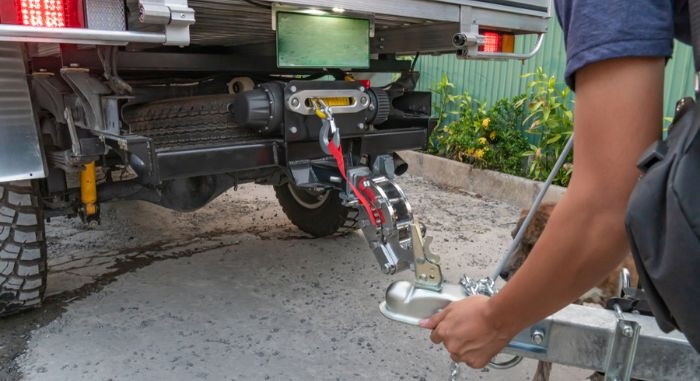
If you’re in the business of clearing out clutter, or you’re just starting your journey in junk removal, picking the right trailer matters. This guide covers the three main types you’ll come across: utility trailers, cargo trailers, and dump trailers, along with the sizes and payload capacity of each.
Renting a trailer for a one-time cleanout? The same trailer types below still apply, jump to whichever one fits your job. But if you’re hauling junk or trash regularly, or thinking about doing it as work, this guide (and LoadUp) can also help you turn that trailer into income.
Whether you’re hauling old furniture, yard waste, construction debris, or general trash, there’s a junk removal trailer suited for the job. Let’s walk through your options.
Best Types of Trailers for Junk Removal
**Click to auto scroll by section.
Picking the best trailer for junk removal
The junk removal industry plays an important role in keeping communities clean and clutter-free. From property cleanouts to large-scale commercial junk disposal, the demand for junk removal and hauling services continues to grow.
At the heart of the work are trailers, the tool that makes hauling trash, debris, and everything in between possible. These vehicles need to move waste safely and efficiently, but not all trailers are built the same way. Depending on the type of jobs you handle, one trailer will serve you better than another:
Open utility trailers: the most versatile option for junk removal. Utility trailers are uncovered, easy to load and unload, and offer a flat loading area, making them ideal for hauling large, bulky items or a mix of smaller debris.
Enclosed cargo trailers: these have a roof and walls, protecting everything inside. They’re a good fit for transporting items you’re donating or recycling, like valuable copper wire.
Dump trailers: built for easy unloading, especially with heavy materials like construction debris or yard waste. A hydraulic lift tilts the bed to dump contents, saving time and labor.
Truck or trailer? Depending on the jobs you take, a truck might actually be a better fit than a trailer. Worth thinking through before you commit to either one.
Open utility trailers
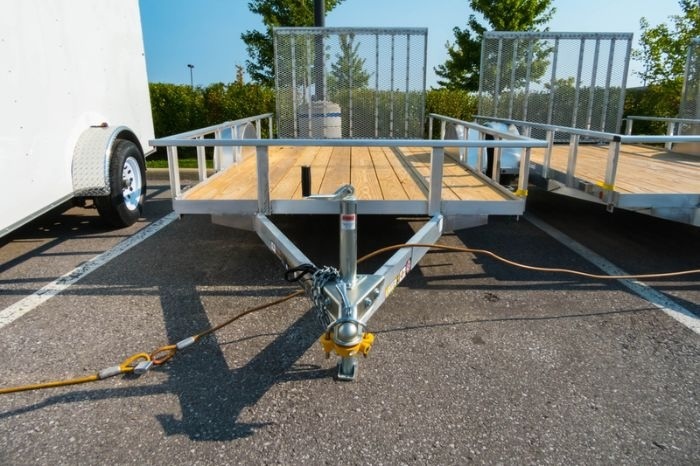
Utility trailers are the most common trailer type in junk removal, and for good reason. They’re like the Swiss Army knives of hauling, versatile and easy to use.
This trailer type has no roof and short sides, which makes loading and unloading easy. That’s a real advantage when you’re dealing with large, awkwardly shaped items like old furniture or appliances.
One of the best things about open utility trailers is the range of sizes available. Width typically runs 5 to 8 feet, and length ranges from 8 to 22 feet. A smaller trailer works well in dense, urban areas and for smaller jobs, while a larger one can carry more junk per trip.
Common utility trailer sizes and payload capacity
| Trailer Size | Average Payload Capacity |
| 5′ x 8′ | 1,900 – 2,400 lbs |
| 6′ x 12′ | 2,670 – 3,710 lbs |
| 7′ x 14′ | 4,800 – 5,500 lbs |
| 7′ x 20′ | 7,200 – 7,800 lbs |
A quick note on terminology: payload capacity is how much you can actually load onto the trailer. GVWR (Gross Vehicle Weight Rating) is the total weight limit including the trailer itself. The two numbers get mixed up often, but payload is the one that tells you what you can actually haul.
Open utility trailers are a good fit for a wide range of jobs. They work well for residential cleanouts, like when someone’s moving and needs to get rid of old furniture and appliances, and they’re just as useful for yard cleanups, branches, bagged leaves, even larger items like old patio furniture.
Utility trailer tip: you can modify these trailers by adding higher sides, so you can pile up more junk or trash and make fewer trips to the landfill or recycling center.
Enclosed cargo trailers
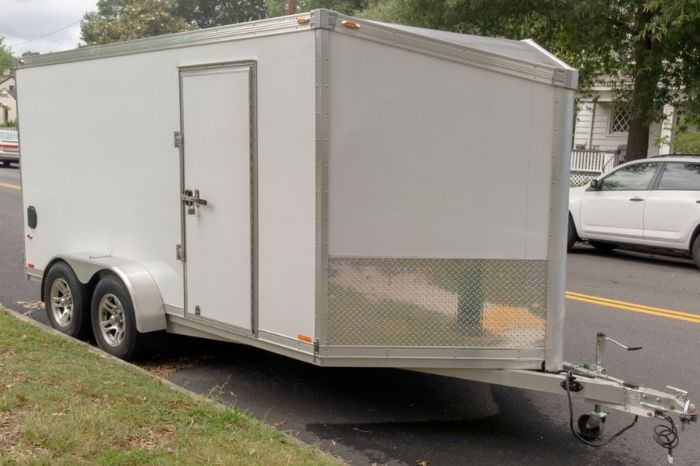
Cargo trailers are built to protect whatever you’re hauling. They come with a roof, walls, and a door, usually at the back, keeping everything inside safe from rain, wind, and prying eyes. Think of it as a portable storage room you tow behind your vehicle.
Enclosed cargo trailers work especially well for hauling items that are being donated or are valuable, like copper or other recyclable materials worth protecting from the weather.
Common cargo trailer sizes and payload capacity
| Trailer Size | Average Payload Capacity |
| 5′ x 10′ | 2,000 – 3,000 lbs |
| 6′ x 12′ | 2,300 – 4,500 lbs |
| 7′ x 14′ | 3,000 – 4,900 lbs |
| 8.5′ x 20′ | 3,800 – 10,000 lbs |
Because they’re enclosed, this trailer type offers protection open utility trailers can’t match, especially if you’re leaving the trailer unattended for any length of time.
Cargo trailers come in a range of sizes, from 5 to 8.5 feet wide and 10 to 24 feet long. If you’re not locked into one specific type of job<, a medium to large cargo trailer is usually the safer, more flexible choice.
Heavy-duty dump trailers
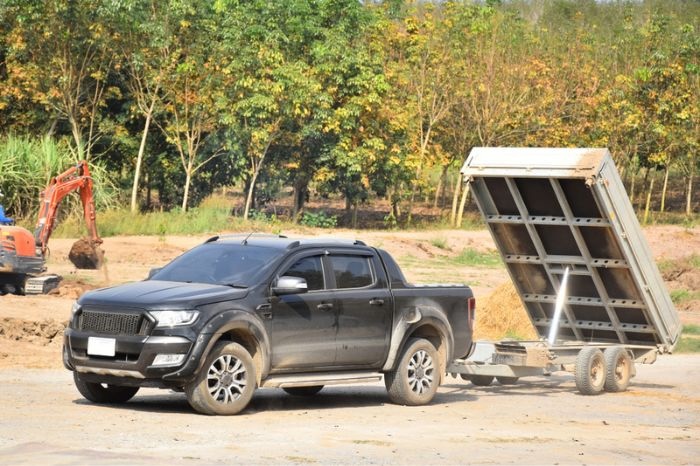
Dump trailers are the heavy lifters of junk removal. They’re built tough, with a hydraulic lift that raises one end to dump out the contents, a feature that sets them apart from other trailer types.
Dump trailers work well for jobs with a lot of small items or assorted junk, construction debris, yard waste, or general trash and debris from a property cleanout. The biggest advantage is time saved: instead of unloading heavy materials by hand, you tilt the trailer and let gravity do the work.
Common dump trailer sizes and payload capacity
| Trailer Size | Average Payload Capacity |
| 4′ x 6′ | 1,000 – 3,000 lbs |
| 6′ x 10′ | 3,000 – 6,000 lbs |
| 7′ x 14′ | 8,200 – 10,500 lbs |
| 8′ x 16′ | 10,000 – 14,000 lbs |
Dump trailers range from 4 to 8 feet wide and 6 to 20 feet long. For smaller residential jobs, a smaller trailer is usually more practical. For larger commercial jobs, you’ll likely need the extra capacity a bigger dump trailer provides.
Choosing the right trailer for junk removal
Now that we’ve covered the main trailer types, here’s how to actually choose between them. Not every trailer is suitable for junk removal, so a few factors are worth weighing.
Factors to consider
- Maneuverability: think about where you’ll be driving and parking. Smaller trailers are easier to handle, especially in cities and tight spaces.
- Towing vehicle: check your vehicle’s GCWR (Gross Combined Weight Rating) to make sure it can safely handle the trailer and load together.
- Time saved: dump trailers, for example, unload quickly, which adds up over a full day of jobs.
- Amount of junk: estimate how much you’ll typically haul. Larger trailers handle more, but they’re also harder to maneuver.
How much does a trailer cost?
Cost depends heavily on whether you’re buying or renting, new or used, and which trailer type you need. Actual pricing varies by region, dealer, and condition, but here’s a general breakdown based on current market data.
Buying new:
| Trailer Type | Typical Price Range |
| Utility trailers | $1,500 – $3,500 |
| Enclosed cargo trailers | $3,400 – $7,500+ |
| Dump trailers | $6,000 – $15,000+ |
Used trailers often run significantly less, a well-maintained used cargo trailer, for example, can sell for 50 to 70% of its original price after several years. If you’re just getting started or testing whether hauling is a good fit, buying used is worth considering before committing to a new trailer.
Renting by the day:
| Trailer Type | Typical Daily Rate |
| Utility trailers | $50 – $150 |
| Dump trailers | $80 – $400+ |
Renting makes sense if you only need a trailer for a single job or an occasional one. If you’re hauling regularly, buying tends to pay for itself faster, since daily rental costs add up quickly over repeated jobs.
Whichever route you go, factor in your tow vehicle’s capacity, financing or rental terms, and how often you’ll actually use the trailer before deciding.
Pros and cons
- Utility trailers: versatile and easy to load, but no protection for your load.
- Cargo trailers: protect your load from weather and theft, but tend to be more expensive and heavier to tow.
- Dump trailers: save real time on heavy loads, but can be overkill for smaller, lighter jobs, and they’re generally the most expensive option.
Trailer types not suitable for junk removal
Some trailers aren’t a good fit for this work: flatbed trailers, refrigerated trailers, drop deck trailers, low boy trailers, conestoga trailers, and curtainside trailers. Most of these are built for semi-trucks and specific freight, like refrigerated goods or vehicle transport, and don’t work well for hauling junk or trash.
Make extra money with LoadUp

If you already own one of the trailer types above, LoadUp can help you put it to work. LoadUp connects people who need junk removed with independent contractors who can do the job.
How to get started as a LoadUp Loader
- Sign up to become a Loader. That’s what LoadUp calls its independent contractors. Apply here.
- Download the app. It’s free and takes a few minutes to set up.
- Browse available jobs. Once you’re signed up, you’ll see junk removal jobs posted in your area, matched to your qualifications.
- Pick the jobs that fit. You choose which jobs to take, on your own schedule, based on what your trailer can handle.
- Get paid for completed jobs. Every job you complete earns you money, whether you’re doing this full-time or picking up extra work on the side.
As a Loader, you set your own schedule and decide which jobs are worth your time. It’s a straightforward way to turn a trailer you already own into a source of income.
Want to become a Loader? APPLY NOW ➞


