

New York City’s bulk trash pickup program is better than a lot of people realize.
Free curbside collection of large items, no appointment needed, no scheduling system to navigate. Most people are surprised to hear that last part. They call 311 expecting to book a pickup and find out the city just picks up whatever you put out on your regular collection day.
The rules get specific fast for certain items, though. Mattresses have to be sealed in plastic. Many refrigerators and air conditioners need a separate refrigerant-removal appointment first. Covered electronics can’t go in the trash or recycling. Small amounts of DIY renovation debris may qualify for collection, but contractor waste does not.
Then there’s the part DSNY doesn’t handle: getting a couch down four flights of stairs, reserving your building’s freight elevator, or figuring out whether your co-op requires a Certificate of Insurance.
Here’s how NYC bulk trash pickup works, what DSNY will take, and what your other options are when curbside collection doesn’t solve the whole problem.
In this article:
- How NYC bulk trash pickup works
- What DSNY picks up as bulk trash
- Mattresses, rugs, and the prep rules people skip
- Refrigerators, ACs, and anything with refrigerant
- Electronics: the rule most NYC residents get wrong
- What renovation debris will NYC collect?
- The part DSNY doesn’t handle: getting it out of the building
- DSNY vs. private bulk pickup: which should you use?
How NYC bulk trash pickup works
The NYC Department of Sanitation provides free curbside collection of large items for all residential buildings across all five boroughs. A large item is anything too big to fit inside a bin or bag: sofas, dressers, bed frames, appliances, mattresses.
You can set out up to 6 items per collection day. No appointment, no special scheduling, no zone-based calendar. Set items out at the curb between 6 PM and midnight the night before your regular collection day. Items must be in front of your own building, not a neighbor’s curb or a nearby corner, and cannot block sidewalks, driveways, mailboxes, fire hydrants, or utility equipment.
One distinction that trips people up: not everything goes out on the same day.
- Metal and rigid plastic items (metal bed frames, metal shelving units, non-CFC appliances like washers, dryers, and stoves) go out on your recycling day
- Everything else (wood furniture, upholstered furniture, mattresses, rugs) goes out on your trash-only day
Putting a metal item out on trash day, or wood furniture out on recycling day, can result in it sitting at the curb until the right collection day. To find your specific collection days, enter your address at nyc.gov/dsny or call 311.
Need it gone before your next collection day?BOOK A PICKUP ❯
What DSNY picks up as bulk trash
Most everyday furniture and household bulk items are eligible. The city’s large-appliance disposal rules follow the same basic material rule: items made mostly of metal or rigid plastic generally go with recycling, while other non-recyclable large items go with trash.
A few items have their own rules: mattresses, refrigerators, air conditioners, and electronics each require specific handling before DSNY will collect them. Those are covered in the sections below.
| Item | DSNY pickup? | Prep or conditions |
|---|---|---|
| Sofas, chairs, tables & dressers | Yes | Generally set out with trash |
| Bed frames | Yes | Metal frames go with recycling; other materials generally go with trash |
| Mattresses & box springs | Yes | Must be completely sealed in plastic |
| Rugs & carpets | Yes | Roll and tie securely |
| Metal furniture | Yes | Set out with recycling |
| Washers, dryers & stoves | Yes | Set out with recycling |
| Dishwashers & microwaves | Yes | Recycling if mostly metal or rigid plastic; otherwise trash |
| Refrigerators, freezers & ACs | Yes, with special handling | Eligible cooling appliances require a CFC-removal appointment first |
| Appliances with R600a or R32 | No | Contact the manufacturer or arrange private disposal |
| Covered electronics | No | Use an approved electronics recycling option |
| Small DIY repair debris | Sometimes | Up to 6 bags or bundles from DIY work at a 1- or 2-family home |
| Contractor or major renovation debris | No | Private disposal required |
Mattresses, rugs, and the prep rules people skip
Mattresses are the most commonly mishandled bulk item in New York City. The bag requirement is specific, it is enforced, and the fine is real.
Mattresses and box springs must be completely sealed in a plastic mattress bag before being placed at the curb. Not loosely covered, not partially wrapped. Fully sealed. The reason is bed bug containment: DSNY will not collect a mattress that isn’t properly enclosed, and improper disposal carries a fine of up to $300. Futons fall under the same rule.
Plastic mattress bags cost a few dollars at most hardware stores and on Amazon. This isn’t a difficult requirement, it’s just an unknown one for a lot of people.
A few other prep rules worth knowing:
- Rugs and carpets: Roll them up and tie securely with twine before setting out. Loose, unrolled rugs may not be collected.
- Furniture: Disassemble if possible before putting it out. Bundle smaller pieces together and tape or tie them. A bed frame in pieces takes up less curb space and is easier to load than one left intact.
- Glass items (mirrors, glass tabletops, windows): Tape up large pieces before setting out. Double-bag any broken glass separately to avoid injury during handling.
Refrigerators, ACs, and anything with refrigerant
Refrigerators, freezers, air conditioners, dehumidifiers, and water coolers all contain CFC gas, better known as Freon. Under federal law, that refrigerant has to be removed before the appliance can be collected and recycled. DSNY handles the removal for free, but it requires a separate step most people don’t know exists until they find their refrigerator still at the curb after collection day.
The two-step process
- Call 311 or submit a request at nyc.gov to schedule a free CFC recovery appointment. You can include up to 10 appliances per appointment. DSNY will dispatch a trained crew to remove the refrigerant.
- After the refrigerant is removed, the crew tags the appliance with a numbered sticker. On your next recycling day after the appointment, sanitation picks up the tagged item. Only tagged appliances are collected, so do not set out a CFC appliance without completing step one first.
Prep requirements
- Remove all hinges and locks from refrigerators and freezers before setting them out. This is a child safety requirement and it is enforced.
- Place the appliance with the back facing the street.
- Set out between 6 PM and midnight the night before your CFC appointment.
The R600a and R32 exception
Some newer appliances use R600a or R32 refrigerant instead of traditional CFCs. This refrigerant is flammable, and DSNY cannot remove it. Before setting any CFC appliance out, check for a yellow triangle sticker with black flames. If you see it, DSNY will tag it with a red sticker and leave it. Contact the appliance manufacturer or book a private hauler instead.
Non-CFC appliances
Washers, dryers, stoves, dishwashers, and microwaves do not contain refrigerant. No 311 appointment needed. Set them out with recycling on your recycling day.
The CFC process works, but it has a timeline. You’re scheduling a crew, waiting for the appointment, then waiting for your next recycling day. If you need a refrigerator or AC gone this week, that calendar may not cooperate with your schedule.
Electronics: the rule most NYC residents get wrong

TVs, computers, monitors, laptops, printers, video game consoles. None of them can go in the trash in New York. This is not a city preference or a guideline. It is state law under the NYS Electronic Equipment Recycling and Reuse Act, in effect since 2015. Putting electronics in regular trash, including curbside bulk collection, carries a $100 fine.
There are four ways to get rid of electronics legally in NYC:
ecycleNYC: For buildings with 10 or more residential units. Building management enrolls online through DSNY; the building receives a secure collection bin. When the bin holds 20 items or is full, building staff requests a pickup and e-waste is collected within five business days. If you’re unsure whether your building participates, ask the super or call 311.
SAFE disposal events: DSNY hosts free drop-off events twice a year, spring and fall, in all five boroughs. Proof of NYC residency may be required. Check nyc.gov/SafeEvents for upcoming dates and locations.
Retailer take-back: Best Buy and Staples accept most consumer electronics at no charge, no purchase required. This is the fastest option for a single item and available year-round.
Curbside e-waste pickup: Available in select neighborhoods in the Bronx, Brooklyn, Queens, and Staten Island. Manhattan coverage has been more limited. Enter your address at nyc.gov/dsny or call 311 to see if your address qualifies.
LoadUp handles what DSNY doesn’t.BOOK ONLINE ❯
What renovation debris will NYC collect?
Small DIY repairs are one exception to the usual construction-waste rules.
According to NYC311’s bulk-item disposal guidance, if you live in a one- or two-family home, did the repair work yourself, and didn’t hire anyone to help, DSNY allows up to six bags or bundles of home-repair debris with regular collection.
Contractor waste is different. If you hired a contractor, repair person, or another professional to complete the work, they are responsible for removing the debris. Major renovations and debris from larger qualifying income properties also require private collection rather than normal residential pickup.
The practical version:
- Small DIY repair at a 1- or 2-family home: DSNY may take up to six bags or bundles.
- Hired contractor: The contractor handles the waste.
- Major renovation: Arrange private disposal.
That distinction can save you from paying for removal you don’t actually need.
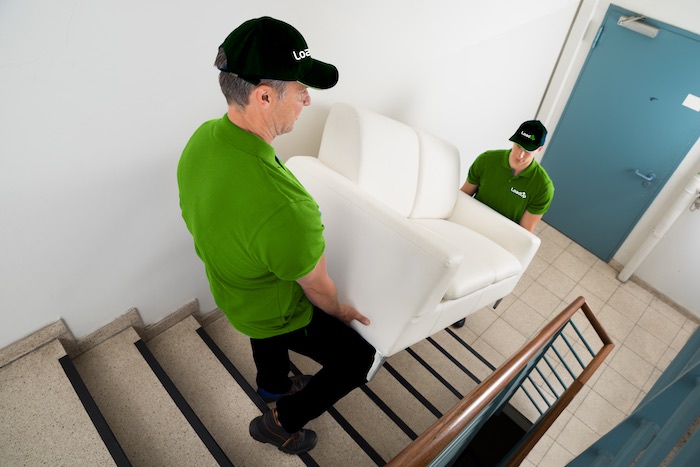
The part DSNY doesn’t handle: getting it out of the building
In most cities, getting something to the curb is a minor logistical task. In New York, it is often the whole problem. DSNY picks up items from the curb, but the distance between your apartment and the curb is your responsibility.
Walk-up apartment buildings
A fourth or fifth-floor walk-up changes things pretty quickly. You may be working with:
- Narrow stairwells
- Tight landings
- Small doorways
- Sharp turns
- No service elevator
- Furniture that was assembled after it entered the apartment
Measure the furniture, doors, stairwell, and landings before trying to move anything large. Sometimes the legs come off. Sometimes a door has to come off its hinges. Sometimes the sofa that somehow made it upstairs five years ago is no longer interested in leaving the same way.
Elevator buildings, co-ops, and condos
Freight elevator reservation: Most elevator buildings require large items to go through the service or freight elevator, not the passenger elevator. Reservations are typically made with the superintendent or building management, sometimes days in advance.
Restricted hours: Many co-ops and condos limit furniture and large item removal to weekday business hours, commonly 9 AM to 5 PM. Some require advance notice to building management before any removal takes place.
Certificate of Insurance (COI): Many doorman buildings and co-ops require any professional hauler to provide a certificate of insurance before entering the building. This is standard in Manhattan and increasingly common in outer-borough elevator buildings. Good NYC haulers expect this request and can provide documentation quickly, but you need to know to ask at booking.
These aren’t DSNY rules. They’re building rules, and they vary. Before scheduling professional removal, ask your super or management office:
- Do I need to reserve the freight elevator?
- Are there approved hours for furniture removal?
- Does the removal company need to provide a COI?
Finding out beforehand is much easier than having a crew arrive and discover the freight elevator is booked until Thursday.
LoadUp handles apartment cleanouts in NYC and carries the insurance documentation most buildings require. Give the building details at booking and the logistics get handled.
DSNY vs. private bulk pickup: which should you use?
DSNY’s program is worth using when your items are covered, your collection day timing works, and you can get things to the curb. A lot of situations fall outside one of those conditions.
| Use DSNY when… | Private pickup may make more sense when… |
|---|---|
| Your item is accepted | DSNY doesn’t accept the item |
| You can move it to the curb | You need in-home removal |
| Your collection day works | You need it gone sooner |
| The load is straightforward | You have several types of items |
| Your building lets you handle the removal yourself | Your building requires a crew, freight elevator, or COI |
| You can follow the prep rules | You’d rather not coordinate multiple disposal methods |
LoadUp provides junk removal across New York City for situations where the city program does not fit. Upfront pricing before you book, same-day and next-day availability, and Loaders are independent contractors who handle the lifting from inside the apartment. No separate appointment needed, no sorting required for mixed loads.
For furniture and household items still in usable condition, LoadUp’s donation-first approach routes eligible items to donation partners including Goodwill, Salvation Army, Habitat for Humanity, and the Furniture Bank Association of North America before anything goes to disposal. Through the Plant with Purpose program, every LoadUp pickup contributes to reforestation efforts nationwide.
LoadUp runs 20-30% below what most junk removal companies charge for comparable work in New York City.
Need help with junk removal in NYC?BOOK ONLINE ❯


