

A treadmill that won’t turn on anymore doesn’t get lighter just because it stopped working. Neither does an elliptical, a weight bench, or a home gym that’s taking up a corner of the garage for no reason. The instinct is to drag it to the curb and let the city deal with it, but most municipalities won’t take large exercise equipment as regular trash, and even where they will, you’re often looking at a special pickup fee and a multi-week wait.
There are four real ways to get rid of broken exercise equipment: recycle it for scrap, donate it if it still works, sell it, or book a pickup. Here’s how to weigh them.
In this post:
Assess what you’ve got
Not everything broken is done for good. A treadmill that won’t start is often a belt or motor issue, not a reason to replace the whole machine. An elliptical with a squeaky pivot usually just needs a bearing. Before you write anything off, a quick look (or a quick search for your model number) can tell you whether repair is realistic or whether it’s genuinely time to let it go.
Have a walking pad instead of a full-size treadmill? The disposal logic is largely the same, but walking pads are smaller, lighter, and easier to donate or sell. Our treadmill recycling and donation guide covers walking pads specifically if that’s what you’re dealing with.
Recycle broken exercise equipment
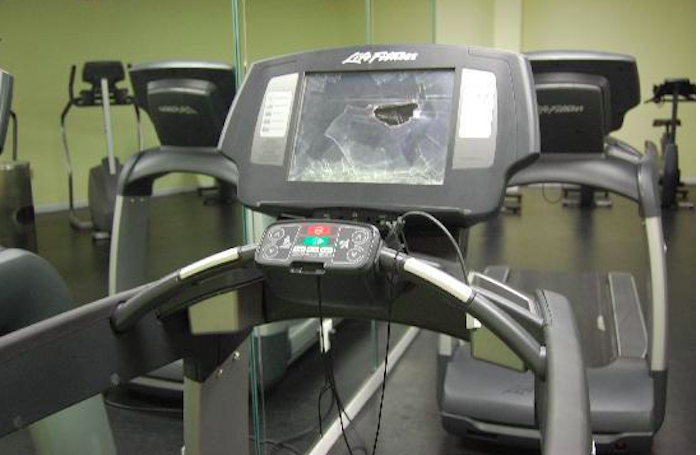
Exercise equipment doesn’t belong in a landfill, and not just because it’s bulky. Most machines are built around a steel frame, and steel doesn’t lose value just because the motor died. Plastic housings, rubber belts, and electronic components can often be separated and recycled too, but that separation has to happen at an actual recycling facility, not a curbside bin.
Free weights and dumbbells are some of the easiest fitness equipment to recycle, they’re solid metal with no motor, no wiring, and no reason to end up anywhere but a scrap yard. A local scrap metal recycler will often take them, sometimes even giving you some money in return. If you’d rather not haul a set of weights yourself, LoadUp’s scrap metal removal service can handle it as part of a larger pickup. Our guide to making money with scrap metal recycling walks through what that actually looks like.
For everything else, check whether your curbside recycling service offers special bulk pickup. Most do, but it usually requires a phone call and an appointment, not just leaving it at the curb. If that’s not available to you, look for a community recycling collection event. Some areas run these once or twice a year specifically for bulky items like old gym equipment that don’t fit standard bins.
Where to donate fitness equipment

If your exercise equipment still works, or needs only a minor fix, donating it keeps it out of the waste stream entirely and puts it somewhere useful.
- Goodwill and the Salvation Army will sometimes take exercise equipment, but coverage varies a lot by location, and a broken machine is a much harder sell than a working one. Call ahead before you load anything into a car.
- Local gyms, schools, and community centers occasionally take donated equipment for their own facilities, especially smaller items like weight benches or cardio equipment that don’t need much space.
- Freecycle is worth trying for anything you’d rather not deliver yourself, list it, and let someone local arrange the pickup.
One real detail worth knowing before you commit to a charity pickup: apartments, condos, and hotel buildings often require a Certificate of Insurance (COI) from whoever’s picking up bulky items on-site. If you live in a building like this, check with your property manager at least a week ahead, getting a COI on file at the last minute is a common reason donation pickups fall through.
Sell your old exercise equipment
A machine in working condition, especially a recognizable brand, holds resale value longer than most people expect. Facebook Marketplace and local classifieds are the easiest starting points for something as large as a treadmill or elliptical, since buyers there are already prepared to arrange their own pickup.
Price it based on brand, age, and working condition, and be upfront about anything that doesn’t work. A treadmill that’s honestly listed as “belt needs replacing” sells faster than one that gets returned after the buyer finds out the hard way.
Make sure to clean it first and take high quality photos. A home gym that looks cared for moves in days. One that looks abandoned in a garage will sit for months.
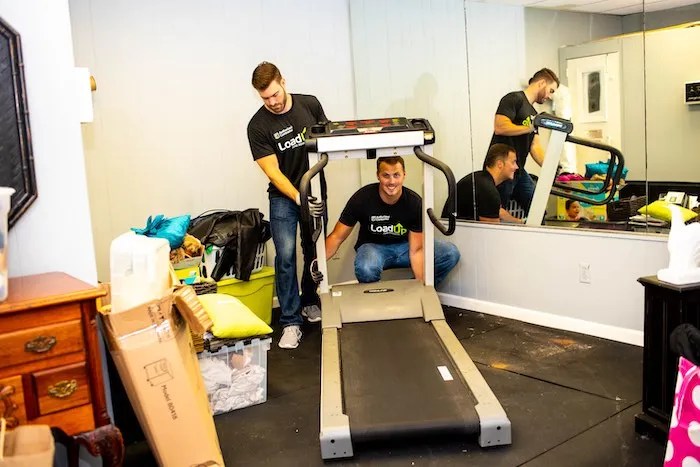
Exercise equipment removal and disposal
If recycling, donating, and selling aren’t panning out, or the equipment is too broken for any of them to make sense, a pickup service can take it off your hands entirely.
LoadUp provides exercise equipment pickup nationwide, with discounted curbside pickup if you’d rather not wait around for a crew to come inside. Our Loaders are insured and background-checked, and we route what we pick up to donation or recycling first whenever it’s possible, not straight to a landfill.
Pricing is upfront before you book, typically 20 to 30% lower than most other junk removal companies, whether you’ve got a single broken pilates machine or a full home gym to clear out.
Here’s some of what we take:
- Elliptical
- Treadmill
- Home gyms
- Gym equipment
- Cardio equipment
- Exercise bikes
- Weight benches
- Pilates machines
- Basketball goals
Got a broken treadmill or home gym taking up space?BOOK ONLINE ❯


