
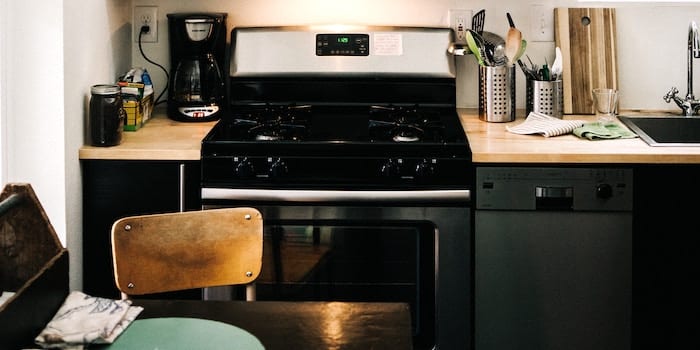
If you’ve ever tried moving a refrigerator by yourself, you already know the challenge. Large kitchen appliances are heavy, awkward, and definitely not a one-person job.
The other problem: you can’t just set most of them at the curb and call it a day. Most municipal trash services won’t collect large appliances, and several states have banned them from landfills altogether. Coffee makers, toasters, and blenders run into their own set of rules too.
Here are eight ways to get rid of an old kitchen appliance, from free to full-service.
Kitchen appliance disposal options
1. Retailer haul-away when you buy new
If you’re already replacing an appliance, this is usually the easiest option. Most major retailers will haul away your old appliance when they deliver the new one. It’s sometimes called a one-to-one pickup or trade-in haul-away, meaning the delivery crew handles both jobs in a single visit.
Fees vary by retailer. When paired with a new appliance delivery, expect to pay somewhere in the range of $25 to $75 extra. Standalone pickup, if you’re not buying anything new, typically runs higher.
A few things worth confirming before you count on this option: some retailers require the old appliance to be in working condition, and some require you to select haul-away at the time of purchase, not after the fact. Confirm when you place the order, not on delivery day.
2. Sell or give it away
If the appliance still works, someone nearby probably wants it. Facebook Marketplace, Craigslist, and OfferUp are the most direct routes. Post a few photos with the model number and condition, and buyers often reach out quickly. If you’d rather skip the transaction entirely, a local buy-nothing group (common on Facebook and Nextdoor) lets you offer it to neighbors for free.
Be honest about the age and any quirks, and plan for two people to be available on pickup day since the buyer will need help getting it out the door.
This option doesn’t work for broken appliances.
3. Donate it
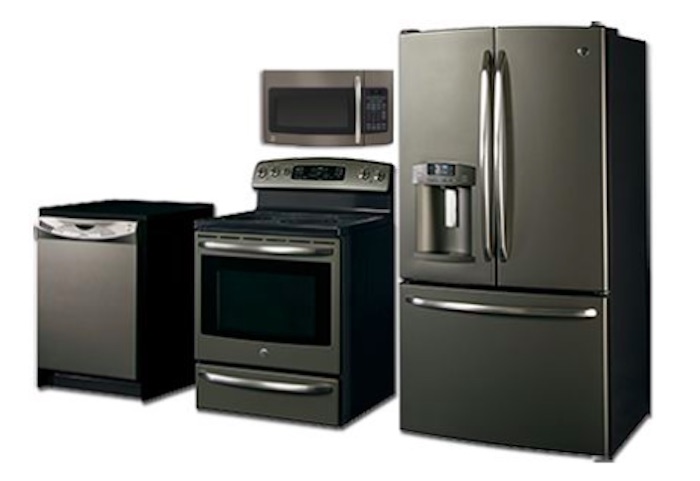
Many charities accept used kitchen appliances in good, working condition. Habitat for Humanity ReStores take large appliances at many locations and sometimes offer free pickup. Goodwill, the Salvation Army, and the Furniture Bank Association of North America are worth checking in your area.
Call ahead before making the trip. Donation requirements differ from one organization to the next, and what donation centers need before accepting an item can vary more than you’d expect. Most require the appliance to be clean and functional. If it no longer works, donation usually isn’t an option.
Rather skip the coordination? SCHEDULE A PICKUP ❯
4. Utility rebate programs
This one surprises a lot of people. Many electric utilities will pick up your old refrigerator or freezer for free and pay you a rebate. Amounts typically range from $25 to $75, depending on the program and where you live.
Utilities do this because older refrigerators and freezers use substantially more electricity than modern models. Removing them from the grid lowers peak demand, which saves the utility money.
Not every utility offers this. Search “[your utility company] appliance recycling rebate” or check with your state energy office to see what’s available in your area. This option applies mainly to refrigerators and freezers, not to dishwashers, ovens, or most other kitchen appliances.
5. Recycle it
For appliances that aren’t in sellable or donatable condition, recycling is a better path than landfill disposal. In some states, it’s also required. Many local utility companies and municipal programs sponsor appliance pickup and recycling. Your local electric utility or state energy office is usually a good starting point for finding one nearby.
You can also bring appliances to a certified recycling or scrap facility directly. Many municipalities have drop-off sites for large household appliances as part of their e-waste or bulk item programs.
White goods and state landfill bans
Kitchen appliances fall under the category of “white goods,” a term from the era when most large household appliances came in white enamel steel. The name stuck, and it now applies to all large household appliances regardless of color.
Many states ban white goods from landfills, require mandatory recycling of them, or both. If you live in one of the following states, standard landfill disposal of kitchen appliances is restricted or prohibited:
- California
- Connecticut: Mandatory recycling only
- Florida
- Illinois: Appliances with mercury switches
- Indiana: Appliances that contain freon
- Louisiana
- Massachusetts
- Minnesota: Banned and mandatory recycling
- Missouri
- Nebraska
- New Jersey: Mandatory recycling only
- New York
- North Carolina
- North Dakota: Banned and mandatory recycling
- Oregon
- Pennsylvania
- South Carolina
- South Dakota
- Vermont
- Wisconsin
6. Scrap metal yard
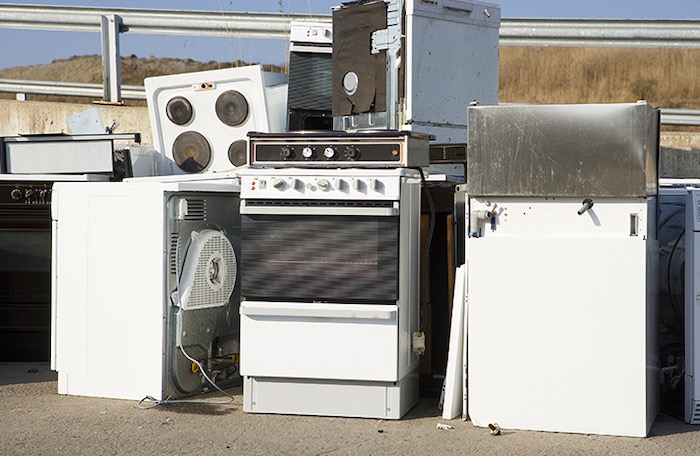
For broken appliances with no resale or donation value, a scrap metal yard is worth considering. Large appliances contain significant amounts of steel and aluminum, and most scrap yards will take them. Depending on the weight and current metal prices, you may get a small payout. For a closer look at how that process works, our guide to making money with scrap metal recycling covers what to expect.
You’ll need to transport it yourself, which means a truck or trailer and someone to help you load it. If hauling it yourself isn’t practical, LoadUp can pick up scrap metal directly from your home.
⚠️ Important: Window air conditioners, refrigerators, and freezers require refrigerants to be removed by a certified technician before a scrap yard will accept them. This is an EPA requirement. Make sure that step is handled before you haul anything in.
7. City bulk pickup
Some municipalities offer scheduled bulk item pickup as part of their regular waste service, which may include large appliances. When available, it can be a convenient option.
Most programs require scheduling at least one to two weeks in advance. Some cities offer it only a few times per year. There may be an additional fee for appliances, and refrigerators or freezers with intact coolant systems may require refrigerant removal before pickup is allowed.
Check your local waste management website or call the municipal services line to find out what’s available in your area, what items qualify, and how far ahead you need to book.
8. Hire a junk removal service
A junk removal service skips all the logistics. No hauling, no scheduling around a utility program, no hunting for a recycling drop-off. A team comes to your home, goes inside, moves the appliance out, and takes it away.
This is the most convenient option, but often the most expensive. Prices vary by company, appliance size, and location. Some companies quote a price after arriving on-site; others, like LoadUp, give you an upfront price when you book. For appliance removal specifically, it’s worth knowing which approach a company uses before you confirm anything.
Ready to skip the hassle? BOOK A PICKUP ❯
What about small kitchen appliances?
Small appliances are a different situation. A coffee maker, toaster, or air fryer is light enough to carry out yourself. The question is where to take it.
If it still works: Donate it. Goodwill, the Salvation Army, and similar thrift stores accept small appliances in working condition at most locations. Facebook Marketplace and local buy-nothing groups work well too.
If it’s broken: Most small appliances can’t go in curbside recycling because of the mixed materials and wiring. A few reliable options:
- Best Buy accepts small appliances for free drop-off at most store locations. No purchase required. This includes microwaves and other countertop appliances that don’t qualify for curbside pickup.
- Many municipalities have e-waste collection days or permanent drop-off sites that take small household appliances.
- Some appliance manufacturers run their own take-back programs. Check the brand’s website before throwing anything out.
Tossing a small broken appliance in the trash is legal in many places, but check your local waste management guidelines first. Some municipalities classify certain small appliances as e-waste, which comes with separate disposal rules.
Get rid of your old appliances with LoadUp
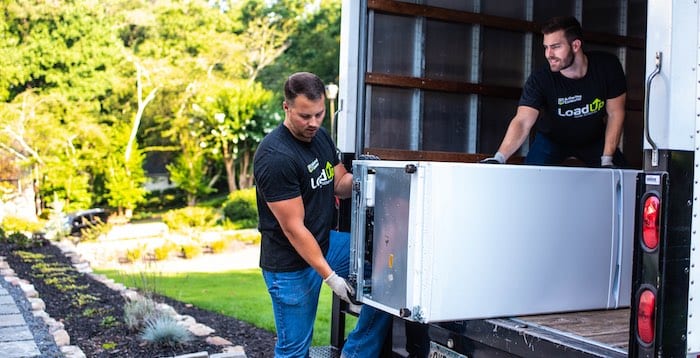
Booking is simple. Get an upfront price online, choose a time that works, and a team of Loaders comes to your home to move and haul the appliance out. No “free estimate” visit beforehand, no price changes when they arrive, no figuring out how to move a 200-pound refrigerator down a flight of stairs on your own.
Our prices run 20-30% lower than competitors on average, and we can often schedule same-day or next-day pickup. You’ll get real-time updates when your Loaders are on the way, so you’re not stuck guessing when to be home. When local options allow, your Loader will prioritize donation or recycling for working appliances over landfill disposal. And a portion of every booking supports reforestation through Plant with Purpose.
Ready to get rid of that old appliance? BOOK A PICKUP ❯
Frequently asked questions about kitchen appliance disposal
For large appliances, usually not. Most residential trash services won’t collect them at the curb, and many states prohibit landfill disposal of appliances altogether. Small appliances may be allowed in regular trash depending on local rules, but check with your waste management provider first.
Some options cost nothing. Utility rebate programs actually pay you, selling on Facebook Marketplace is free, and some charities offer free pickup. City bulk pickup is sometimes included in regular service and sometimes costs extra. Retailer haul-away with a new appliance delivery typically runs $25 to $75. Hiring a junk removal service is the most expensive option, with pricing based on appliance size and location. For a full breakdown, see our appliance removal cost guide.
Yes, in most cases. Refrigerators, chest freezers, and window air conditioners contain refrigerants that must be removed by a certified technician before most transfer stations and landfills will accept them. This is a federal EPA requirement. If you’re using a professional junk removal service or a retailer haul-away program, they handle this as part of the job. If you’re hauling it yourself, call ahead to confirm what’s required.
Retailer haul-away on delivery day is the fastest for people who are replacing something. If you’re not buying new, a junk removal service can usually schedule pickup within one or two days. City bulk pickup programs typically require one to two weeks of advance notice.
Yes. LoadUp picks up refrigerators, dishwashers, ovens and stoves, chest freezers, and most other large kitchen appliances. A few things LoadUp can’t take: appliances still connected to gas, water, or electrical lines; built-in or permanently affixed appliances; units with unremoved hazardous materials; and commercial-grade appliances over certain weight limits. Book online for upfront pricing. You’ll see the price before scheduling, with no on-site estimate needed.
Small broken appliances generally can’t go in curbside recycling. Best Buy’s free drop-off program is the most accessible option for most people. Municipal e-waste collection events and manufacturer take-back programs are worth checking too. If none of those are available locally, most small appliances can go in regular trash, though local rules vary. Worth confirming with your waste management authority first.
By Joel McRae | Updated July 2026


