

Hot tubs are great right up until they stop working, start leaking, or become the world’s largest backyard decoration. Then comes the obvious question: how do you actually get rid of one?
Unfortunately, it’s not as simple as dragging it to the curb. Even an empty, standard-sized hot tub weighs anywhere between 500 and 1,000 pounds. Many are hardwired into a 240-volt electrical circuit, and there’s a good chance yours is wider than the gate it needs to pass through.
You have three realistic options: sell or give it away, cut it apart and dispose of it yourself, or hire a professional hot tub removal service.
In this guide:
Options for getting rid of an old hot tub
| Option | Best for | The catch |
|---|---|---|
| Sell or give it away | Working tubs still in usable condition | Finding a buyer who can also arrange transport |
| Remove it yourself | Homeowners comfortable with demolition work and disposal logistics | Full day of heavy labor, fiberglass hazards, and disposal planning |
| Hire a professional | Broken, heavy, built-in, or hard-to-access tubs | Higher upfront cost than doing the labor yourself |
Sell or give it away
If the hot tub still works, someone may be willing to take it off your hands. Try listing it on Facebook Marketplace, Craigslist, or a local neighborhood group. Include clear photos, honest details about its condition, and a note explaining that the buyer is responsible for removal.
That last part matters. Plenty of people want a free hot tub. Far fewer arrive with a trailer, lifting equipment, and four friends who know what they signed up for.
A tub that leaks, has damaged equipment, or hasn’t run in years will be harder to give away. At that point, removal is usually the more practical move.
Take it apart yourself
You can remove a hot tub yourself, but don’t confuse “possible” with “easy.” The job usually involves draining and disconnecting the tub, removing the side panels, cutting the shell into sections, bagging loose insulation, loading everything, and finding a facility that accepts the materials.
DIY removal makes the most sense when you’re comfortable with demolition tools, have at least one person helping, and already know where the debris can go.
Hire a professional
Professional removal is the cleanest option when the tub is large, broken, built into a deck, or trapped behind a narrow gate. A removal crew can break it down on-site, carry the pieces out, load them, and handle disposal. If there’s enough space, they may be able to move the tub whole. If not, out comes the saw.
You’ll still need to drain it first. Hardwired tubs should also be disconnected before the appointment.
Old hot tub taking up space?BOOK A PICKUP ❯
Why hot tub removal is harder than it looks
The weight is the first thing that surprises people. Most standard above-ground hot tubs weigh somewhere between 500 and 1,000 pounds empty. Large eight-person spas push 1,200 pounds or more. A full tub can hit upward of 5,000 pounds once the water is factored in. Draining it is non-negotiable.
Most full-size hot tubs run on a hardwired 240-volt circuit. Getting that safely disconnected requires a licensed electrician, not just a flipped breaker, and it has to happen before any removal can take place. That’s a separate appointment and a separate cost to plan for before you book the removal itself.
Access is usually the third obstacle. Standard residential gate openings run 32 to 36 inches wide. Most hot tubs are wider than that when intact. Depending on the property, getting the tub out may require:
- Removing a fence panel or cutting the tub into sections on-site
- Carrying pieces through a narrow side yard
- Moving the tub down from an elevated deck
- Navigating stairs, slopes, or landscaping
- Temporarily removing obstacles along the exit route
It’s much better to discover a three-inch problem with a tape measure than with four people holding a hot tub.

DIY hot tub removal: what it actually takes
DIY removal is possible, but it’s a full demolition job that takes most of a day.
Drain completely and confirm the power is off. Both need to be done at least 24 hours before starting. Do not start cutting until you are certain the tub is fully disconnected. This is not the part of the project where guessing saves time.
Remove the cover, side panels, and detachable components. Take off the exterior panels to expose the frame, plumbing, pump, and heater. Removing metal components at this stage makes the shell lighter and allows them to be recycled separately.
Cut the shell into sections. Use a reciprocating saw with heavy-duty demolition blades, working from the top down in pieces no larger than three to four feet. Two people can get through the cutting in three to four hours on a straightforward job.
Bag loose insulation and debris as you go. The foam layer crumbles and spreads quickly. One gust of wind can turn your yard into a snow globe made of insulation. Use contractor bags and tarps to contain it before that happens.
Haul materials to an approved facility. Not all landfills accept fiberglass or foam, so call yours ahead of time to confirm. Metal components can be recycled at a scrap yard.
One important warning: fiberglass produces airborne particles that are hazardous to your lungs and embed in skin. A proper respirator (not just a dust mask), goggles, and long sleeves are not optional.
Add in a narrow backyard, an elevated deck, or a concrete pad and the job grows considerably. Between prep, filling a rental dumpster, and the disposal run, a full day is a realistic minimum.
Hot tub disposal: what happens after removal
A hot tub isn’t one material. It’s a mix of metal, fiberglass or acrylic, foam insulation, wiring, and mechanical parts. They don’t all end up in the same place.
Metal components, including the steel frame, pump motors, copper wiring, and heater elements, are recyclable and typically go to scrap metal facilities.
The fiberglass or acrylic shell is a different story. Fiberglass is difficult to recycle, and many local landfills don’t accept it. In most cases, the shell and the foam insulation end up at an approved waste facility. Some areas have industrial recyclers that handle these materials, but availability varies by location.
If you’re working with LoadUp, metal components and motors are recycled where local options exist. What happens to the shell and foam depends on what facilities are available in your area.

What professional hot tub removal looks like
A professional crew will generally handle:
- Checking the removal route
- Moving the tub whole when possible
- Cutting it apart when necessary
- Carrying the pieces out
- Loading and transportation
- Disposal or recycling
- Basic cleanup of the removal debris
A tub built into a deck may need extra work before removal can begin. Deck boards, framing, or railings may need to come out first. Share those details when booking. The more the crew knows ahead of time, the fewer surprises everyone deals with later.
The tub needs to be fully drained and the electrical disconnect needs to be completed before the crew arrives. If either is still pending when they show up, the job can’t happen.
How much does hot tub removal cost?
The cost depends less on the fact that it’s a hot tub and more on what it takes to get that hot tub onto the truck.
Size
A small portable spa takes less labor and truck space than a large acrylic tub or swim spa. Larger and heavier tubs take more time and more truck space.
Whether it needs to be cut apart
A tub that rolls out through a wide gate in one piece takes less labor than one that has to be cut apart in a tight backyard.
Access
Stairs, narrow pathways, steep slopes, decks, fences, and long carrying distances can all add work. Describe your setup accurately when booking; a realistic description produces an accurate price.
Location
Labor, transportation, and disposal costs vary by market.
Electrical disconnection is generally a separate service. It doesn’t change the removal price directly, but a hardwired tub can’t be removed while it’s still connected.
LoadUp’s hot tub removal starts at $875, and that price is locked in before you book, not after someone shows up and reassesses the job in person. That’s 20-30% less than what most junk removal companies charge for the same work.
Why most people end up calling a pro
The weight, the electrical disconnect, the access problem, the disposal logistics. None of it is impossible on its own. It’s the combination that gets people. Most homeowners who start down the DIY path hit the point where they’re renting a dumpster, calling around to find a landfill that accepts fiberglass, and looking up respirators on Amazon, and realize this was never really a weekend project.
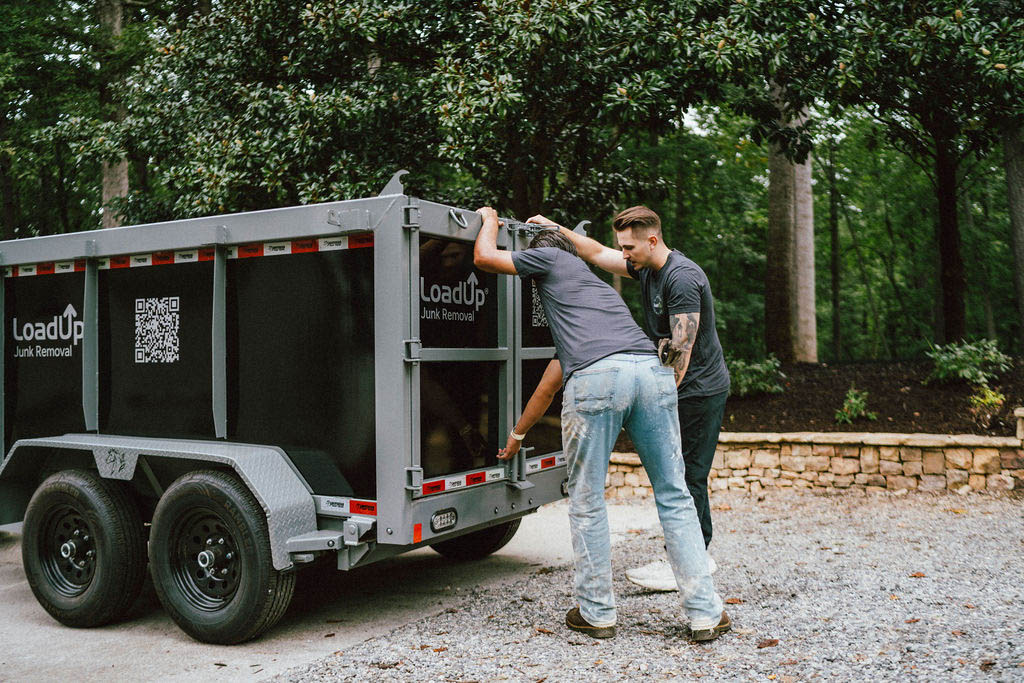
If the tub is already drained and the electrical is handled, LoadUp takes care of everything else. The crew shows up, assesses the access route, and handles the lifting, the on-site cutting if the tub can’t fit through the gate, the loading, and the haul-away. You don’t need to figure out disposal or own a reciprocating saw.
Book online, get an upfront price based on your tub’s size and access conditions, and pick a time that works. Same-day and next-day pickups are available in most markets.
Drain it. Disconnect it. We’ll handle the heavy part.BOOK A PICKUP ❯
Also removing other outdoor items?
If you’re clearing out the backyard while the crew is already there, LoadUp also removes above-ground pools, pool equipment including pumps and filters, sheds, and patio furniture. Add any of them to the same pickup to save on the per-item price.


